
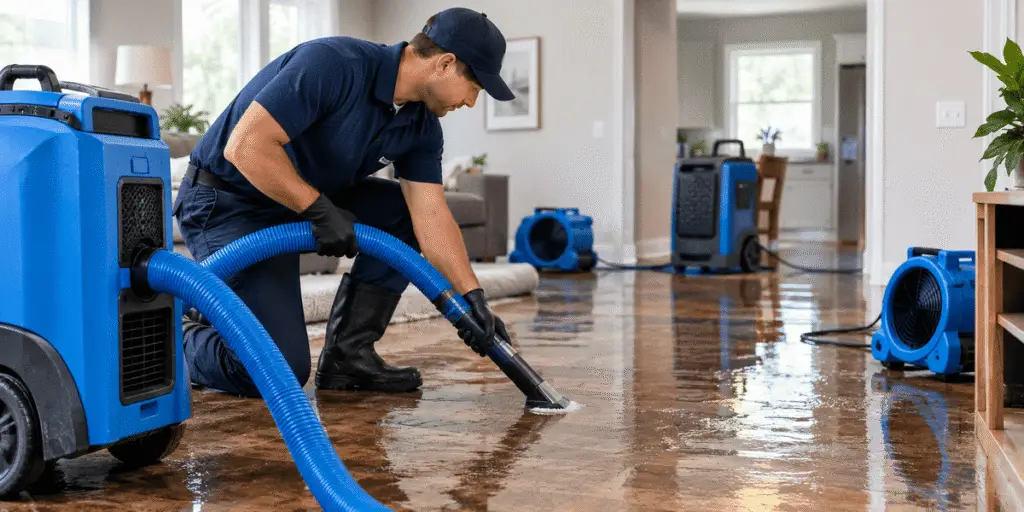
When water suddenly enters a home, removing the visible water is only the first step. Water can move into flooring, walls, cabinets, insulation, and other materials that may not look wet from the outside.
The emergency water extraction process is designed to remove standing water and address the moisture that remains behind. A typical restoration process involves several steps, from finding the source to checking that affected materials have dried properly.
1. The Source of the Water Is Identified
The first step is to determine where the water came from and stop the source when possible. This could be a burst pipe, overflowing appliance, damaged roof, or another plumbing problem. Stopping the flow helps prevent additional water from entering the affected area.
The type of water also matters. Clean water from a supply line requires different handling from water that may contain sewage, chemicals, or other contaminants.
2. The Affected Area Is Inspected
After the source is controlled, the affected area is inspected to determine how far the water has traveled. Water does not always stay where it first appears. It can move underneath flooring or into walls and other building materials. Moisture detection equipment can help locate damp areas that are not obvious during a visual inspection.
The inspection also helps determine which materials may be dried and which may need to be removed.
Professional water damage restoration follows established procedures for inspection, moisture assessment, extraction, drying, and restoration.
3. Standing Water Is Extracted
Once the affected areas have been assessed, standing water is removed.
Depending on the amount of water involved, this can involve pumps, wet vacuums, or other extraction equipment. The goal is to remove as much excess water as possible before the drying stage begins.
Extraction is important because water left inside a structure takes much longer to remove through evaporation. Porous materials such as carpet and padding may also require additional extraction because water can remain trapped inside them.
4. Hidden Moisture Is Checked
Removing visible water does not mean the property is dry. Moisture can remain beneath flooring, inside walls, around baseboards, or in other areas that are difficult to see. Moisture meters and other detection tools can help identify these areas.
This step is important because drying equipment needs to address the actual extent of the moisture, not just the areas where water was visible.
5. Drying Equipment Is Set Up
After extraction, the drying process begins. Air movers help increase airflow across wet surfaces. Dehumidifiers remove moisture from the surrounding air. Together, these tools help move moisture out of wet materials and into the air, where it can then be removed.
The exact drying setup depends on the materials affected, the amount of moisture, indoor conditions, and the layout of the property. Professional drying is based on controlling airflow, humidity, and temperature rather than simply placing a few fans in the room.
6. Moisture Levels Are Monitored
Drying is not finished just because surfaces feel dry. Moisture levels are checked during the process to determine how the affected materials are responding. If certain areas are still holding moisture, the drying setup may need to be adjusted.
This monitoring continues until appropriate drying goals have been reached. The IICRC S500 standard recommends documenting moisture measurements and monitoring the drying process until those goals are achieved.
7. Damaged Materials Are Evaluated
Not every water-damaged material can be restored. Some materials may be dried and cleaned successfully. Others may have absorbed too much water, become contaminated, or suffered damage that makes removal necessary.
The condition of the material, the type of water involved, and how long the material has been exposed all affect this decision.
Removing a damaged material is not automatically part of every water extraction job. It is considered when drying or cleaning is no longer a practical option.
8. Cleaning and Restoration Follow
Once the affected areas have been extracted and dried, the next steps depend on the condition of the property.
Surfaces might need cleaning, damaged materials may need replacement, and areas that were affected by contaminated water may require additional treatment.
The final restoration work can vary significantly from one water emergency to another. A small supply-line leak may require limited repairs, while extensive flooding can involve flooring, drywall, cabinetry, and other parts of the structure.
How Long Does Emergency Water Extraction Take?
There is no fixed time for every water extraction job.
A small amount of standing water may be removed relatively quickly. Drying can take longer because moisture remains inside building materials even after the visible water is gone.
The drying time depends on factors such as:
- How much water entered the property
- How long the materials were exposed
- Which materials were affected
- How deeply those materials absorbed moisture
- Indoor temperature and humidity
- The effectiveness of the drying setup
Moisture monitoring helps determine when the affected materials have reached appropriate drying levels rather than relying only on how they look or feel. Read more about our emergency water removal services that provide prompt assistance.
Why Is Fast Water Extraction Important?
Water can continue moving through porous materials after a leak or flood has occurred. The longer excess moisture remains, the greater the chance of additional damage.
Quick extraction reduces the amount of water that remains in the structure and allows the drying process to begin sooner.
This does not mean every water emergency can be fully resolved immediately. The important part is to begin controlling the water and moisture as soon as possible.
What Happens After Water Extraction?
Emergency water extraction is one stage of the overall restoration process.
After standing water is removed, the property still needs to be checked for hidden moisture and properly dried. Depending on the extent of the damage, cleaning, material removal, repairs, or other restoration work may follow.
The main goal is not simply to remove the water that can be seen. It is to identify where moisture has traveled, remove excess water, dry affected materials, and address damage that remains.
Frequently Asked Questions
What is emergency water extraction?
Emergency water extraction is the process of removing standing water from a property after a leak, flood, burst pipe, or similar water emergency. It is normally followed by moisture detection and structural drying.
Is water extraction the same as water damage restoration?
No. Water extraction focuses on removing excess water. Water damage restoration can include extraction, moisture detection, drying, cleaning, damaged-material removal, and repairs.
Can water remain after extraction?
Yes. Water can remain inside flooring, walls, carpet, padding, and other porous materials even after standing water has been removed. Moisture detection and monitoring help identify areas that still need to be dried.
How do professionals know when a property is dry?
Moisture levels in affected materials are checked during the drying process. Drying equipment remains in place until appropriate drying goals have been reached and verified.
Why are dehumidifiers used after water extraction?
Water trapped in building materials eventually evaporates into the surrounding air. Dehumidifiers help remove that moisture from the air so the drying process can continue effectively.